Amanda Fitzsimmons
Advancing STEM Education across Maine


Hi, I’m Amanda Fitzsimmons!
I’m a high school STEM educator, teacher-author, curriculum developer, and researcher with more than a decade of experience in science and STEM education. With a background in geology and engineering, I’ve built my career around helping students experience science as something they can investigate, design, question, and use to understand the world around them.
I currently teach high school Chemistry, Physics, and Honors Computer Science, where I combine rigorous science instruction with laboratory investigation, project-based learning, engineering design, and computational thinking. I also developed and launched a project-based computer science program that includes animation, video game design, and Computer Science Principles.
Beyond my classroom, I’m actively involved in STEM education research and computer science leadership. I serve as a Co-Principal Investigator for the NSF-funded CS4ME initiative, working with educators, researchers, industry partners, and other stakeholders to develop research-informed approaches for integrating computer science across existing curriculum. My work also includes developing instructional resources and providing professional development that helps educators bring computer science and computational thinking into their classrooms.
My research experience extends into science education through NSF-supported chemical bonding research. As a Research-Practice Partnership member with UMaine’s InterChemNet project, I contributed to Modeling Chemical Bonding for Middle School Classrooms and the CORE (Chemical Observations, Representations, Experimentation) Learning Cycle, connecting scientific modeling, observation, and experimentation with the way students develop an understanding of chemistry.
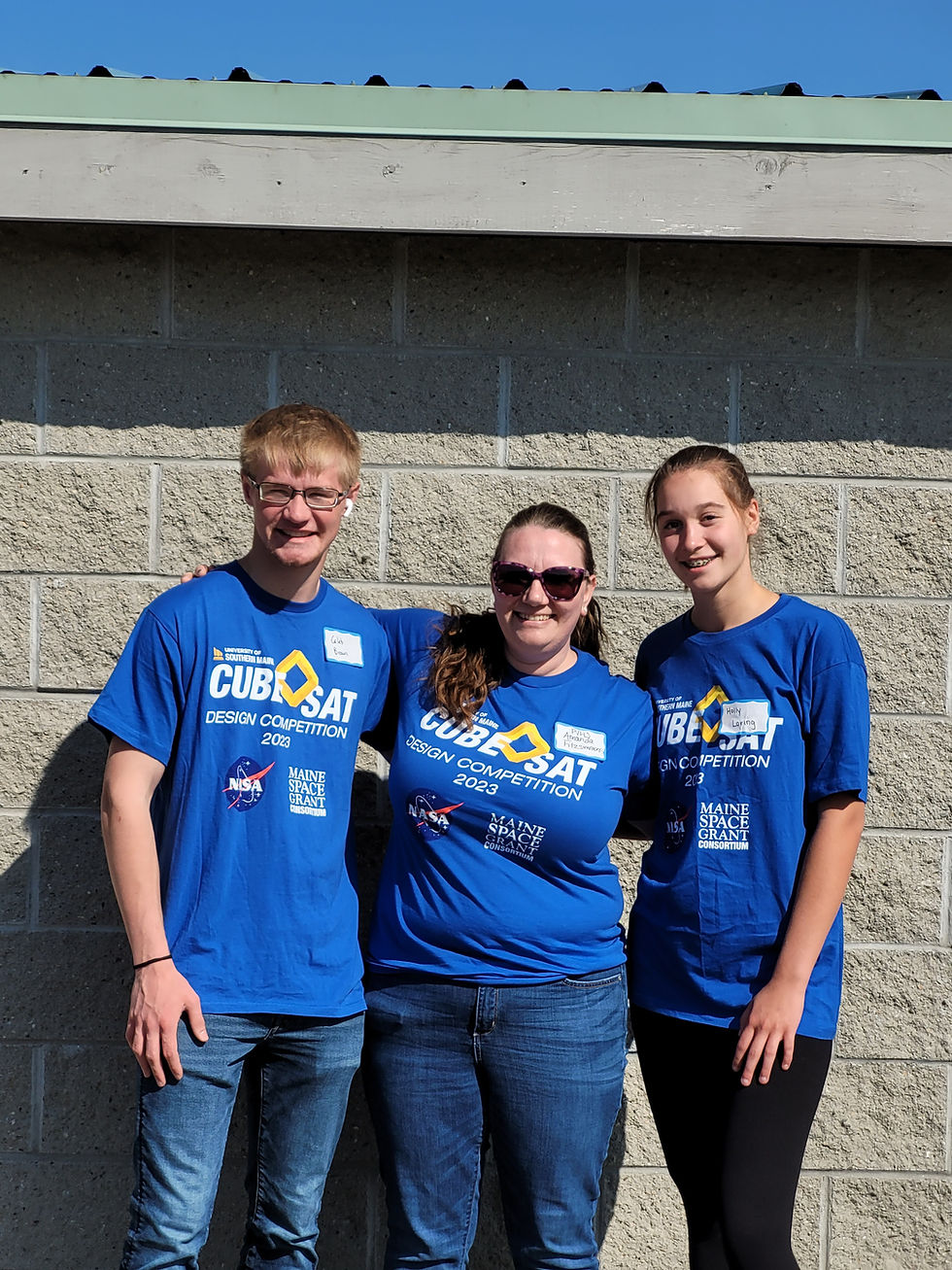
I’ve also had opportunities to bring aerospace and engineering into my work as an educator. While teaching in Florida, I participated in two NASA educator programs, including the NASA STEM Bootcamp for Florida Teachers, and incorporated aerospace-focused engineering design and inquiry-based learning into science instruction. More recently, I mentored high school students through the USM CubeSat Competition, where our team was selected as a finalist in 2023.
As the creator of FitzSTEM, I also develop classroom resources for high school science educators. My work draws directly from my experience teaching Chemistry, Physics, Computer Science, and interdisciplinary STEM, with an emphasis on rigorous, engaging resources that teachers can realistically use in their classrooms.
My work is now expanding into children’s science writing as well. As a teacher-author, I’m interested in the intersection of science, storytelling, and curiosity, and in creating opportunities for young readers to begin wondering about scientific ideas long before those ideas appear in a high school textbook.
Across all of these roles, my philosophy remains remarkably consistent: students should have opportunities to do science, not simply learn about it. Whether I’m teaching in the classroom, conducting education research, developing curriculum, mentoring students through an engineering challenge, or writing, my goal is to make complex ideas accessible without taking away the challenge, discovery, and curiosity that make STEM worth exploring.
Leadership & Research
Managing curriculum development and professional growth for Maine’s educators via National Science Foundation grants. dedicated to ensuring equitable Computer Science access across the state.
CS Education Leadership in Maine
As a Co-Principal Investigator for the NSF-funded CS4ME initiative, I help advance computer science education through curriculum development, interdisciplinary integration, and professional learning for educators. My work focuses on expanding meaningful computer science opportunities for high school students while supporting teachers in bringing CS concepts into their classrooms with confidence.
NSF-funded CS4ME Initiatives
My research experience includes NSF-supported work in science and STEM education. As a Research-Practice Partnership (RPP) member with UMaine’s InterChemNet project, I contributed to Modeling Chemical Bonding for Middle School Classrooms and the development and implementation of the CORE (Chemical Observations, Representations, Experimentation) Learning Cycle, designed to strengthen students’ understanding of chemical bonding through observation, modeling, and experimentation. My research also includes the NSF-funded CS4ME initiative, exploring how computer science and computational thinking can be meaningfully integrated into high school science instruction and curriculum.
Amanda Fitzsimmons
NASA Educator & CubeSat Projects
My aerospace STEM experience includes participation in two NASA educator programs while teaching in Florida, including the NASA STEM Bootcamp for Florida Teachers. These experiences strengthened my use of engineering design, inquiry, and aerospace-focused project-based learning in the science classroom. I have also mentored students through authentic aerospace engineering challenges, including leading a student team to become finalists in the 2023 USM CubeSat Competition.
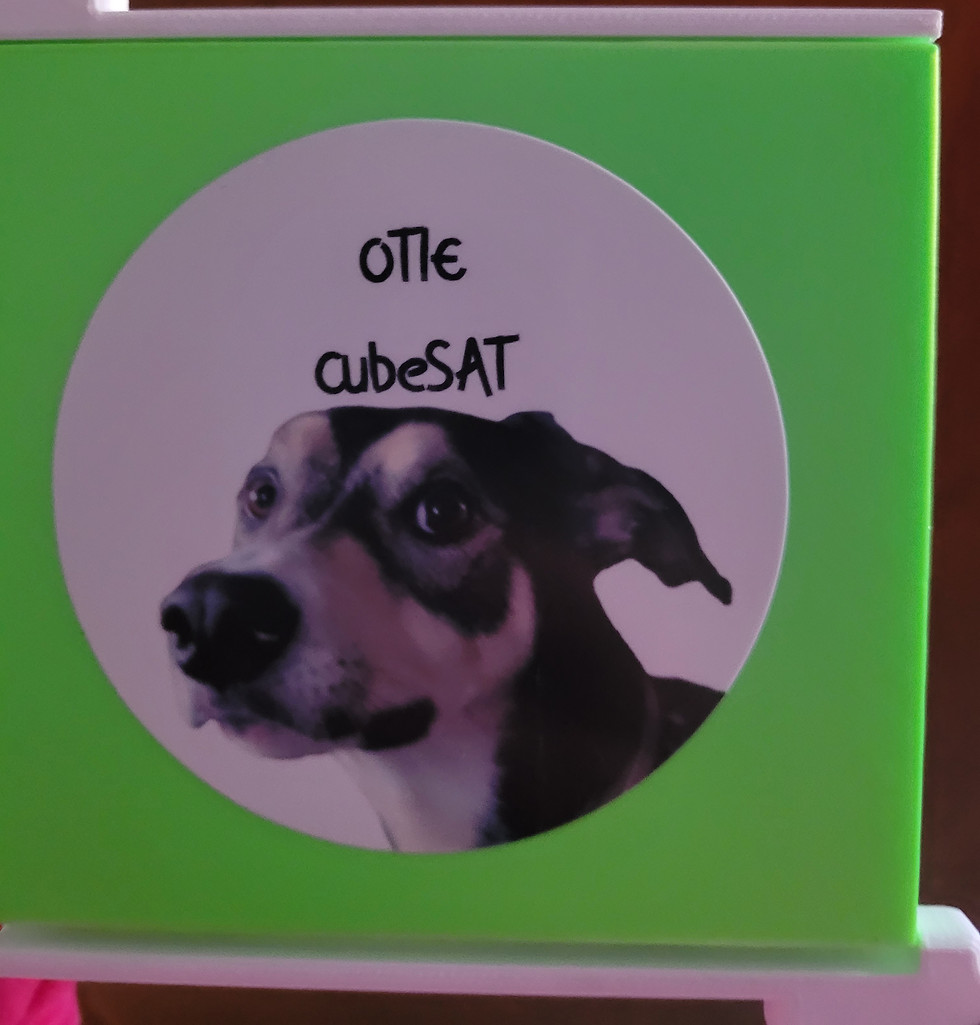
Mission OTIE
Mission Summary:
The primary mission objective of the OTIE CubeSAT is to measure the amounts of greenhouse gases in different levels of the atmosphere, specifically the stratosphere, troposphere, and tropopause. Greenhouse gases are responsible for trapping heat within the atmosphere leading to higher global temperatures, overall leading to many negative impacts on the Earth. One of these negative impacts lies in the melting of glaciers which increase sea levels. Others are seen in more extreme heat waves and even an increase in intensity and number of hurricanes. Through the OTIE Mission, data can be gathered on the severity of global warming.
The OTIE CubeSAT will measure greenhouse gases and temperatures at each of the following altitudes: 9-10 km, 24-25 km, and 31-32 km. This measuring will be done through the use of the following sensors: a barometric sensor, a temperature/weather sensor, an NDIR CO2 sensor, a VOC sensor, and an onboard OLED display. These will measure and detect greenhouse gases. The goal of this mission is to see how the levels of these gases are increasing through different altitudes and compare differences in the stratosphere, troposphere, and tropopause. This mission will begin on May 27, 2023 and it will last anywhere from 2-3 hours.

Cube SAT Finalists

Expertise & Competencies
Strategy & Leadership
I bring a systems-level approach to STEM education, combining classroom experience with program development, research, and collaborative leadership. My work has included designing and launching STEM and computer science programs, leading interdisciplinary initiatives, mentoring educators and students, and collaborating with researchers, industry partners, and community stakeholders. I focus on turning ambitious ideas into practical, sustainable programs that strengthen teaching, expand student opportunities, and create meaningful pathways into STEM.
-
STEM & Computer Science Program Development
-
Strategic Program Design & Implementation
-
Curriculum Development & Instructional Design
-
Educator Professional Development
-
Research-Practice Partnership Leadership
-
Cross-Functional & Stakeholder Collaboration
-
Project Management & Resource Coordination
-
Student Leadership & STEM Pathway Development
Computer Science Leadership
Research & Curriculum
My work connects educational research with classroom practice. Through NSF-funded research initiatives, curriculum development, and more than a decade in STEM education, I focus on translating research into rigorous, engaging learning experiences that teachers can realistically implement and students can meaningfully explore. Your résumé specifically highlights STEM curriculum development, NGSS alignment, CS integration, research-based pedagogy, and instructional design.
-
NSF-Funded STEM Education Research
-
Research-Practice Partnerships (RPPs)
-
Science & Computer Science Curriculum Development
-
Computer Science Integration Across Science Disciplines
-
NGSS & CSTA Standards Alignment
-
Project-Based & Inquiry-Driven Learning
-
Computational Thinking Integration
-
Laboratory & Experiential Learning Design
Digital Innovation
I integrate digital tools and emerging technologies into science instruction to make complex concepts more visual, interactive, and accessible. From 3D printing and digital modeling to Physics and Chemistry simulations, I use technology to create opportunities for students to experiment, visualize abstract phenomena, test ideas, and explore systems that cannot always be replicated in a traditional laboratory. My focus is not technology for technology’s sake, but purposeful innovation that deepens scientific understanding, encourages exploration, and expands what is possible in the science classroom.
-
3D Printing & Design
-
Physics & Chemistry Simulations
-
Interactive Scientific Modeling
-
Virtual & Digital Laboratory Experiences
-
Data Collection & Visualization
-
Technology-Enhanced Scientific Inquiry
-
Digital Tools for Project-Based Learning
-
Emerging Technologies in Science Education
-
Innovative Science Curriculum Design
STEM Teaching & Learning
At the center of my work is a belief that students learn science best by actively engaging in it. I design rigorous, student-centered learning experiences that invite students to investigate phenomena, ask questions, analyze evidence, solve problems, and apply scientific concepts beyond the textbook. My approach blends laboratory investigation, inquiry, engineering design, project-based learning, and real-world application to build both scientific understanding and the confidence to tackle complex problems.
-
Inquiry-Based Science Instruction
-
Project-Based & Experiential Learning
-
Laboratory Investigation & Experimental Design
-
Scientific Reasoning & Problem-Solving
-
Engineering Design & Hands-On STEM
-
Real-World Applications of Science
-
Student Engagement & Scientific Curiosity
-
College & Career-Ready STEM Skills
-
Rigorous, Student-Centered Instruction